Study in Ireland – A Complete Guide for Nepal and International Students
Ireland is a beautiful island nation known for its high-quality education, rich culture, and welcoming environment. Combining modern cities, historical sites, and unspoilt countryside, Ireland provides an ideal setting for international students seeking world-class education in a safe, English-speaking country. This guide covers everything you need to know about studying in Ireland, including the education system, visa requirements, living expenses, universities, and a complete document checklist for a smooth application process.
Why Study in Ireland
Friendly and Safe Environment
Ireland is consistently ranked among the safest and friendliest countries in the world.
Voted World’s Friendliest Country by Lonely Planet in 2008 and 2010.
Ranked 12th in the 2009 Global Peace Index.
International students enjoy a welcoming, supportive, and inclusive environment.
Offers opportunities for outdoor activities like climbing, water sports, hiking, and team sports.
English-Speaking Country
English is the primary medium of instruction.
Strong cultural, economic, and educational ties with the UK and the USA.
Approximately 36% of the population is under 25, making it an exciting and vibrant student-friendly country.
Internationally Recognised Qualifications
Irish universities and colleges are globally recognised for academic excellence.
Offers innovative programs in business, science, technology, arts, humanities, and language studies.
Graduates are considered highly employable worldwide.
Innovative and Creative Culture
Ireland has a rich cultural heritage and a history of world-leading innovators.
Famous figures include Oscar Wilde, James Joyce, Ernest Walton, and John Bell.
A culture that nurtures creativity, innovation, and intellectual growth.
Leading Global Companies
Ireland hosts the European headquarters for Google, Facebook, Apple, Intel, Pfizer, and more.
International students benefit from internships, career opportunities, and exposure to multinational environments.
Key Facts About Ireland
Capital: Dublin
Location: Western Europe
Area: 84,421 km²
Population: Approx. 6.4 million
Currency: Euro (€)
Official Languages: English and Irish (Gaelic)
Largest Cities: Dublin, Cork, Limerick, Galway, Waterford, Drogheda, Dundalk
Religion: Roman Catholic 87.4%, Church of Ireland 2.9%, Others 9.7%
Time Zone: GMT +0:00
Climate: Mild; warmest months May–August, coldest December–February
Cultural Highlights
Rich literary history, producing four Nobel Laureates in Literature.
World Heritage Sites: Brú na Boinne, Skellig Michael, Giant’s Causeway.
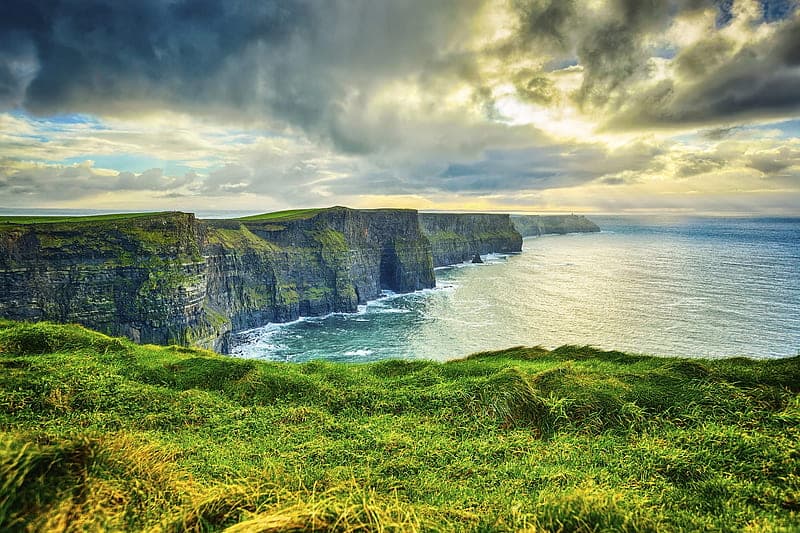
Popular tourist destinations: Bunratty Castle, Rock of Cashel, Cliffs of Moher, Holy Cross Abbey, and Blarney Castle.
Ireland has strong European connectivity with affordable and frequent flights for travel across Europe.
Education System in Ireland
Ireland offers:
Undergraduate Degrees (3–4 years)
Postgraduate Taught Programs (1 year)
Postgraduate Research Programs (1–2 years)
Diploma and Certificate Courses
The academic year usually begins in September, with some institutions offering January intake.
Top Courses in Ireland
Popular study fields among international students include:
Business and Management
Computer Science and IT
Data Analytics and Artificial Intelligence
Engineering
Pharmaceutical Sciences
Nursing and Healthcare
Hospitality and Tourism
Finance and Accounting
Popular Universities in Ireland
Trinity College Dublin (TCD)
University College Dublin (UCD)
University College Cork (UCC)
National University of Ireland, Galway (NUIG)
Dublin City University (DCU)
Technological University Dublin (TUD)
These institutions offer globally recognised programs with excellent industry exposure and research opportunities.
Cost of Study in Ireland
Program Level | Tuition Fee (Approx.) |
|---|---|
Undergraduate | €9,000 – €15,000 per year |
Postgraduate | €10,000 – €20,000 per year |
MBA Programs | €12,000 – €25,000 per year |
Intake Available in Ireland
Intake | Application Period | Notes |
|---|---|---|
September (Main Intake) | Apply from November to March | Most popular intake |
January | Apply from July to October | Limited courses available |
Visa Type and Interview
Visa type: Student Visa
Medium of teaching: English
Interview: A telephonic interview may be conducted by the case officer
Living Cost in Ireland
International students must show proof of approximately €7,000–€10,000 per year for living expenses.
Estimated Monthly Expenses:
Accommodation: €400 – €900
Food and Groceries: €200 – €300
Transport: €100 – €150
Utilities and Miscellaneous: €150 – €250
Total estimated yearly cost (Tuition + Living): NPR 12–20 Lakhs (approx.).
Post-Study Opportunities
Graduate Job Search Visa allows students to stay up to 2 years post-graduation.
Opportunities to work in multinational companies such as Google, Facebook, Apple, Intel, and Pfizer.
Highly valued global career prospects.
Ireland's Academic and Cultural Environment
Strong research and innovation culture.
Universities emphasise creativity, flexibility, pragmatism, and industry-readiness.
Ireland has produced 4 Nobel Laureates in Literature.
A vibrant student life with a mix of historical and modern experiences.
Dublin, Cork, and Galway are the most popular student cities, offering multicultural environments and rich social lives.
Conclusion
Ireland is not just a place to study; it’s a destination for growth, innovation, and global opportunity. With its excellent universities, welcoming environment, and thriving job market, Ireland provides international students with everything they need to succeed academically and professionally.
Take the first step towards your future – Study in Ireland with PRH Global Consultancy Pvt. Ltd. We provide end-to-end guidance, including course selection, admission, visa processing, and post-arrival support, ensuring a smooth and successful study abroad experience.