IELTS
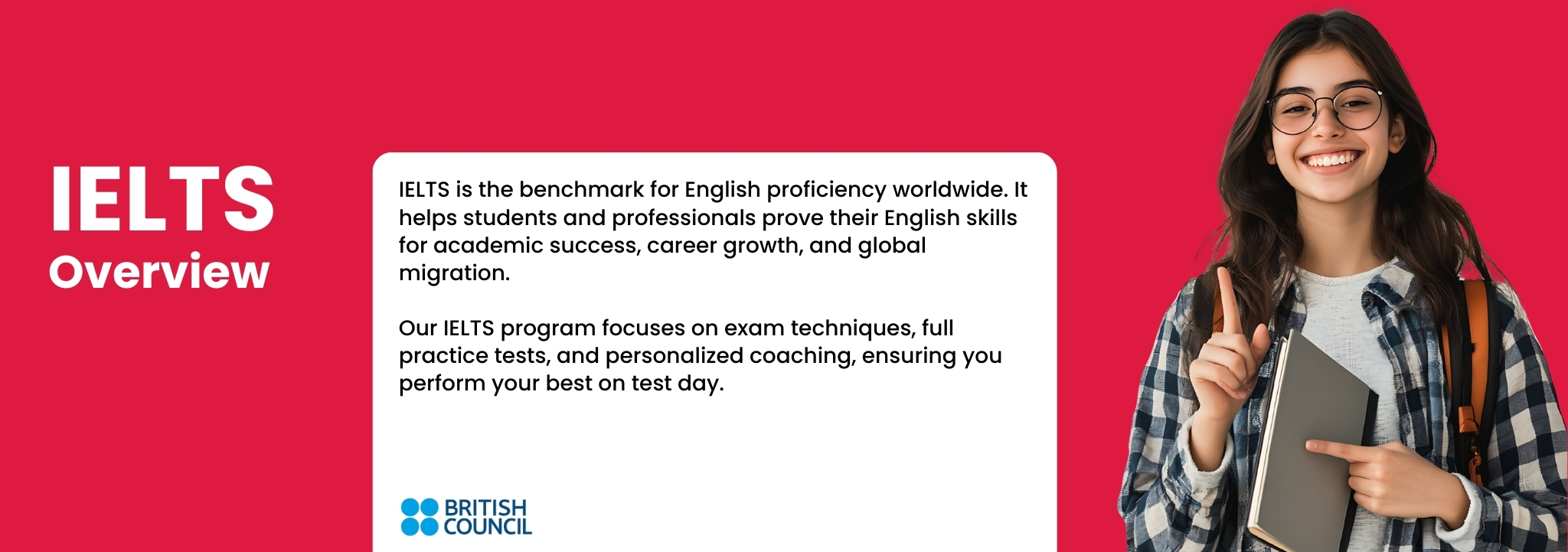
The International English Language Testing System (IELTS) is the world's most popular English language proficiency test for higher education and global migration.
IELTS Preparation in Nepal (2026)
IELTS preparation in Nepal in 2026 involves professional coaching, up-to-date exam strategies, and regular practice. To succeed, students must focus on strong guidance, consistent study, and frequent mock tests.
IELTS (International English Language Testing System) is a globally recognized English-language test. Students and professionals take IELTS to study abroad, work, or immigrate.
This guide explains everything about the IELTS exam, including exam types, structure, band scores, and preparation tips. Let’s start!
Why is IELTS important in 2026?
IELTS is accepted by universities, employers, and immigration authorities worldwide. It is one of the most trusted tests for English proficiency.
Benefits of IELTS
Accepted by 10,000+ organizations worldwide
Helps in study, work, and immigration
Measures all four English skills:
Listening, Reading, Writing, Speaking
Types of IELTS Exam
1. IELTS Academic
For students who want to study at universities or colleges abroad.
2. IELTS General Training
For those who want to work or immigrate to English-speaking countries.
IELTS Exam Structure
IELTS has four sections:
Section | Duration |
Listening | 30 minutes |
Reading | 60 minutes |
Writing | 60 minutes |
Speaking | 11–14 minutes |
Total exam time: 2 hours 45 minutes
IELTS Band Score
IELTS scores range from 0 to 9. Each section gets a score, and the average becomes the overall band score.
Band Score | Meaning |
9 | Expert user |
8 | Excellent user |
7 | Good user |
6 | Competent user |
5 | Modest user |
4 | Limited user |
3 | Minimal user |
2 | Intermittent user |
1 | Non-user |
0 | Did not attempt |
How to Prepare for IELTS in Nepal (2026)
To score high in IELTS, you need a clear plan, good materials, and regular practice.
1. Join a Good IELTS Institute
Choose an institute with experienced teachers and modern teaching methods.
2. Practice All Four Skills
Your study plan should include:
Listening practice
Reading practice
Writing practice
Speaking practice
3. Use Updated Study Materials
Use recent IELTS books, online resources, and official practice tests.
4. Take Mock Tests Regularly
Mock tests help you manage time and understand the exam pattern.
5. Improve Vocabulary & Grammar
Strong vocabulary and correct grammar improve your writing and speaking scores.
Simple Tips for IELTS Success
Understand the exam format
Practice daily
Manage your time well
Learn from your mistakes
Focus on weak areas
Build confidence for speaking
FAQ – IELTS Preparation in Nepal (2026)
1. What is IELTS?
IELTS is an English language test used for study, work, and immigration abroad. It assesses your Listening, Reading, Writing, and Speaking skills.
2. Which IELTS test should I take – Academic or General?
IELTS Academic: For students who want to study abroad
IELTS General Training: For work or immigration purposes
3. What is the duration of an IELTS course?
IELTS course duration varies depending on your level and target band score.
Usually, 4 to 8 weeks is sufficient for most students.
4. What is a good IELTS band score?
A 6.0 to 7.0 band score is good for most universities.
For top universities, 7.0 and above is preferred.
5. How can I prepare for IELTS in Nepal?
To prepare well, you should:
Join a professional IELTS institute
Practice all four skills regularly
Use updated study materials
Take mock tests frequently
When will I get my IELTS results?
Your IELTS results are usually released 13 days after your test date.
You can check your results online through the official IELTS portal or collect them from your test center.